




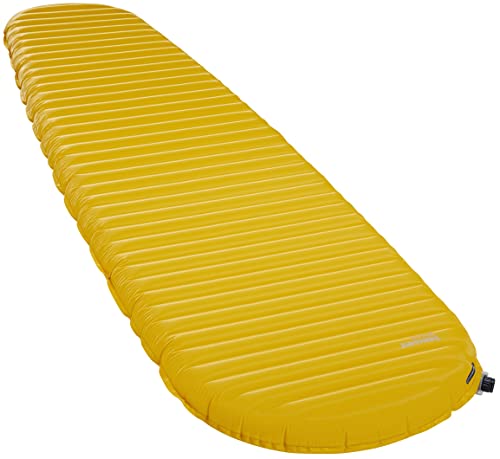
Therm-a-Rest LuxuryMap Sleeping Pad
We designed the LuxuryMap sleeping pad for campers who refuse to compromise on backcountry comfort. This self-inflating pad combines our pressure-mapped foam core with a high-performance air chamber, delivering hotel-like support in a package that packs down to the size of a sleeping bag.
The result is a sleeping surface that conforms to your body while providing exceptional stability throughout the night. Whether you're car camping or trekking to remote alpine lakes, the LuxuryMap transforms uneven ground into a restorative sleep system.
Construction & comfort details
Pressure-mapped foam technology
Our engineers developed the LuxuryMap’s foam core using body-pressure mapping data from hundreds of campers. The result is a variable-density foam layout that places firmer support beneath your hips and shoulders while allowing softer cushioning under your legs and feet.
This targeted support system prevents the pressure points that cause you to toss and turn on traditional flat pads. The self-inflating design means the foam expands automatically when you open the valve — no lung power required. Simply unroll the pad, open the TwinLock valve, and let physics do the work while you set up camp.
Four-season insulation performance
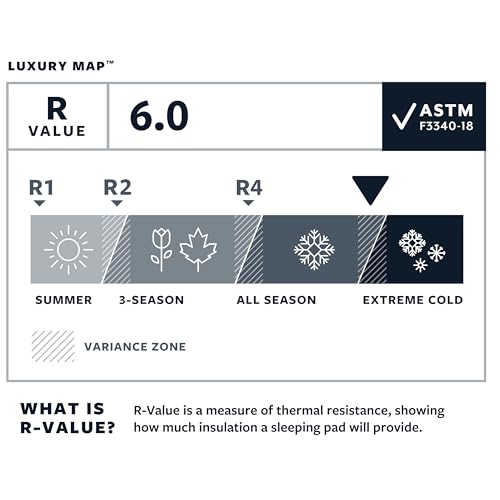
The LuxuryMap earns its R-value 6.8 rating through a combination of closed-cell foam density and strategic air-chamber design. This insulation threshold keeps you warm on snow platforms, frozen ground, and high-altitude campsites where temperatures regularly drop below zero.
We’ve tested this pad in conditions ranging from summer desert floors to winter mountaineering camps above treeline. The foam core provides continuous thermal barriers that don’t shift or create cold spots like air-only pads. External temperature fluctuations have minimal impact on your sleep comfort.
Fabric durability and care
Top fabric construction
The 75-denier polyester top fabric resists punctures from tent floor seams, gravel, and pine needles without adding unnecessary weight. We apply a slip-resistant print pattern that keeps your sleeping bag in place throughout the night — no more sliding off onto the tent floor.
The bottom fabric uses a tougher 150D polyester for abrasion resistance against rough ground. Both surfaces are treated with our proprietary DWR coating that sheds moisture and makes cleaning simple.
Premium self-inflating pads for backcountry comfort




Rated 4.8 by verified buyers
LuxuryMap sleeping pad questions
The pad self-inflates to approximately 90 percent capacity in 3 to 5 minutes when you open both valves. Air circulation and temperature affect inflation speed — warmer conditions inflate faster. Once self-inflation completes, add 5 to 10 breaths through the valve to reach your preferred firmness. Total setup time from stuff sack to ready-to-sleep is under 10 minutes.
In cold weather below 40°F, the foam takes slightly longer to expand. You can speed the process by unrolling the pad in direct sunlight for a few minutes before opening the valves.
Yes, the LuxuryMap's R-value of 6.8 provides four-season insulation suitable for winter camping in temperatures down to -25°F. We've tested this pad extensively in snow camping conditions and high-altitude mountaineering applications.
For extreme cold below -25°F, pair the LuxuryMap with a closed-cell foam pad underneath for additional ground insulation. The combination creates a winter sleep system rated for Arctic conditions. Always match your sleeping bag's temperature rating to expected nighttime lows for complete cold-weather protection.
The LuxuryMap uses a self-inflating foam core that provides structure and insulation without requiring lung power to inflate. Air-only pads like our NeoAir series are lighter and pack smaller but require manual inflation and offer less cushioning stability.
Foam-core pads excel at durability and consistent support throughout the night. Air chambers can shift pressure as you move, while foam maintains even support. The trade-off is weight and packed size — the LuxuryMap weighs nearly twice what an ultralight air pad does. Choose based on whether comfort or weight savings is your priority.
Open both TwinLock valves completely and roll the pad from the foot end toward the valve end, pressing down firmly as you go to force air out. This takes 30 to 45 seconds with practice.
Once rolled, close the valves to prevent re-inflation, then place the pad in the compression stuff sack. Cinch the straps progressively tighter over 2 to 3 minutes — rushing this step can damage the foam core. The gradual compression allows air pockets to escape without creating internal tears. Store the rolled pad horizontally in your pack to distribute weight evenly.
The LuxuryMap occupies more pack volume than ultralight air pads, but many backpackers consider the comfort worth the trade-off for trips under seven days. The compressed size of 10 × 26 inches fits inside or strapped to the outside of most 50-liter and larger packs.
We recommend the LuxuryMap for base-camp scenarios, short backpacking trips where comfort is essential, or car camping where weight and bulk are not limiting factors. For lightweight backpacking covering high mileage, consider our ProLite or NeoAir series instead.
Every LuxuryMap includes the sleeping pad, a compression stuff sack with cinch straps, a repair kit with fabric patches and adhesive, and a printed setup guide. The repair kit contains two patches sized for typical punctures and a tube of urethane adhesive that remains viable for five years.
We do not include a pump or inflation bag, as the self-inflating design eliminates the need for inflation accessories. The TwinLock valve system allows manual breath inflation for final firmness adjustment if desired.
Yes, field repairs are straightforward with the included repair kit. Clean the punctured area with water and allow it to dry completely. Cut a patch that extends half an inch beyond the hole in all directions. Apply a thin layer of adhesive to both the patch and the pad surface, wait 30 seconds for the adhesive to become tacky, then press the patch firmly in place.
Allow the repair to cure for at least 8 hours before re-inflating the pad. For best results, place a heavy object on the patch during curing. Most punctures smaller than a quarter inch seal permanently with this method. Larger tears may require professional repair after your trip.