


Therm-a-Rest NeoAir Venture Sleeping Pad
We built the NeoAir Venture for backpackers and campers who refuse to compromise on warmth, weight, or durability. This sleeping pad combines our proven WaveCore construction with a high R-value that keeps you insulated down to freezing temperatures, whether you're camped above treeline or tucked into a valley.
The Therm-a-Rest NeoAir Venture packs down smaller than a one-liter water bottle yet inflates to 2.5 inches of cushioned support. Our ThermaCapture reflective layer traps radiant heat while horizontal baffles distribute warmth evenly from shoulder to toe. The 75-denier polyester face fabric resists punctures from rocky ground, pine needles, and years of trail use.
We designed this pad for three-season adventurers who want reliable insulation without the bulk of a winter-specific model. It inflates in under a minute with 10–15 breaths and deflates flat for rapid morning packouts.
What makes the NeoAir Venture exceptional
Insulation technology and R-value performance
The NeoAir Venture achieves an R-value of 5.0 through a combination of our ThermaCapture reflective barrier and multiple layers of synthetic insulation sandwiched inside the pad’s core. The reflective layer bounces your body heat back toward you rather than letting it escape into the ground, while the internal baffles create dead-air pockets that slow conductive heat loss.
This R-value rating means the pad provides reliable warmth down to approximately 20°F when paired with an appropriately rated sleeping bag. We tested this insulation system across alpine environments and high-desert campsites where nighttime temperatures regularly drop below freezing. The horizontal baffle architecture ensures warmth remains consistent across the entire sleep surface, eliminating cold spots at your hips and shoulders.
Durability and fabric construction
We chose 75-denier polyester for the NeoAir Venture’s top and bottom fabric because it withstands the abrasion and sharp-object contact that defines backcountry use. This is heavier than the 30- or 50-denier ripstop found on ultralight summer pads, but the tradeoff buys you a sleeping surface that won’t puncture the first time you clear pine cones from your tent footprint.
The fabric’s denier rating refers to the mass of 9,000 meters of a single thread — the higher the number, the thicker and more abrasion-resistant the weave. Our field testing showed that 75-denier polyester resists snags from granite talus, volcanic scree, and dried sagebrush better than lighter materials while adding only a few ounces to the packed weight.
Packed size and portability
Regular vs. Large dimensions
The Regular NeoAir Venture measures 72 inches long and 20 inches wide, fitting sleepers up to 6 feet tall with a standard shoulder width. It packs down to 9 inches tall and 5 inches in diameter — roughly the size of a one-liter Nalgene bottle — and weighs 1 pound 2 ounces without the stuff sack.
Our Large version extends to 77 inches long and 25 inches wide for taller users or those who shift positions frequently during the night. Packed dimensions grow to 10.5 × 6 inches, and weight increases to 1 pound 7 ounces. Both sizes compress small enough to stow inside or lash to the outside of a 40- to 65-liter backpack without dominating your load.
More sleeping pads for four-season backcountry travel
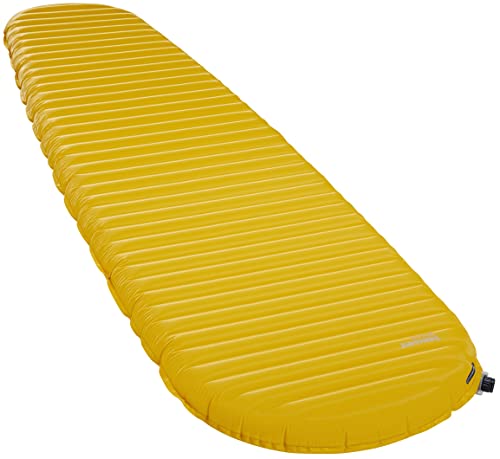


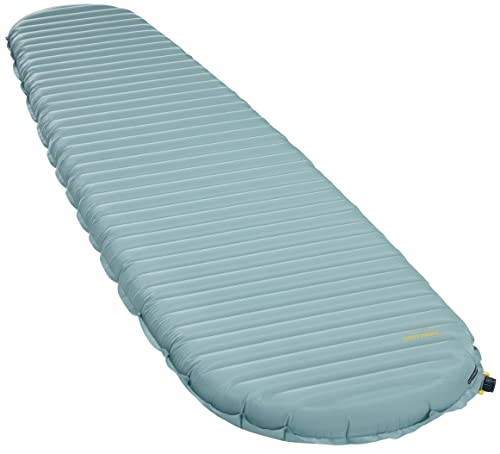
Rated 4.8 by verified buyers
Common questions about the NeoAir Venture
The NeoAir Venture has an R-value of 5.0, which provides reliable insulation for temperatures down to approximately 20°F when paired with an appropriately rated sleeping bag. This rating is based on the ASTM F3340-18 standard, which measures a sleeping pad's resistance to heat loss.
The R-value comes from our ThermaCapture reflective layer and WaveCore baffle construction, which work together to trap body heat and minimize conductive heat loss to the ground. For trips where nighttime temperatures stay above 40°F, a lower R-value pad may be sufficient and will save pack weight.
You can inflate the pad using either your breath or the included pump sack. Using your breath, the pad typically requires 10 to 15 full exhalations through the flat valve. Open the valve fully, place your mouth over the opening, and blow steadily until the pad reaches your desired firmness.
The pump sack method is faster and avoids adding moisture from your lungs, which is especially important in freezing conditions. Capture air in the sack, attach it to the valve, and compress the sack to push air into the pad. Most users can fully inflate the NeoAir Venture in under a minute using the pump sack.
The NeoAir Venture is designed for three-season use and works well in cold conditions down to approximately 20°F. For winter expeditions where temperatures regularly drop below 10°F or you're camping on snow, we recommend our winter-specific pads with R-values of 6.0 or higher.
If you do use the Venture in near-winter conditions, pair it with a high-quality cold-weather sleeping bag and consider placing a closed-cell foam pad underneath for additional insulation and puncture protection on snow or ice.
The Regular NeoAir Venture measures 72 inches long and 20 inches wide when fully inflated, with a thickness of 2.5 inches. This size fits most sleepers up to 6 feet tall. The pad weighs 1 pound 2 ounces without the stuff sack.
Packed dimensions are 9 inches tall and 5 inches in diameter, roughly the size of a one-liter water bottle. The Large version measures 77 × 25 inches inflated, packs to 10.5 × 6 inches, and weighs 1 pound 7 ounces.
Every NeoAir Venture includes a repair kit with adhesive patches. To repair a puncture, first locate the leak by inflating the pad and listening for escaping air or submerging sections in water to spot bubbles. Clean and dry the area around the puncture thoroughly.
Cut a patch from the repair kit that extends at least half an inch beyond the hole in all directions. Peel the backing, apply the patch firmly over the puncture, and press down for 30 seconds to ensure good contact. Allow the adhesive to cure for at least 10 minutes before re-inflating the pad. For best results, apply patches in temperatures above 50°F.
The NeoAir Venture produces some rustling sound when you shift positions, which is common with inflatable pads that use reflective insulation layers. The noise level is moderate — quieter than earlier-generation reflective pads but not as silent as non-insulated foam.
Most users report that they adjust to the sound within one or two nights of use. If you're an especially light sleeper or camping with a partner sensitive to noise, consider placing a thin fleece blanket or sleeping bag liner between you and the pad to dampen the sound.
Store the pad unrolled and partially inflated with the valve open in a cool, dry location away from direct sunlight. Keeping the pad compressed for extended periods can stress the internal baffles and reduce the pad's ability to maintain full loft over time.
Avoid storing the pad in hot environments like car trunks or attics, as excessive heat can degrade the adhesives and synthetic materials. Before storing, make sure the pad is completely dry inside and out to prevent mildew growth.