
NeoAir XLite NXT Won’t Hold Air? Here’s the Fix
Waking up on cold ground because your sleeping pad deflated overnight is frustrating, especially when you’ve invested in a premium ultralight pad like the NeoAir XLite NXT. The good news: most sleeping pad leaking air issues come down to a small puncture or valve problem you can fix yourself in about twenty minutes.
We’ve helped thousands of backpackers troubleshoot NeoAir pads over the years, and the repair process is straightforward once you know where to look. This guide walks you through finding the leak, patching it correctly, and making sure it holds through your next trip.
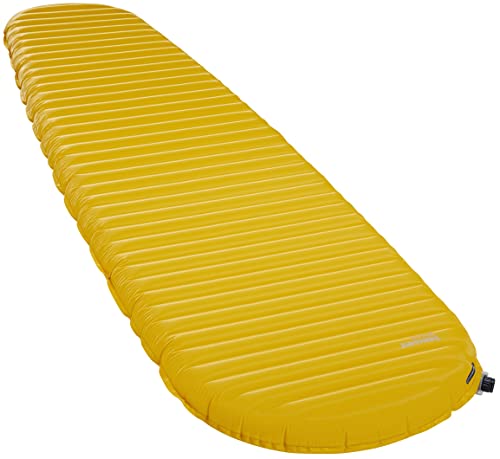
Finding the Leak: The Soapy Water Method
Inflate your pad fully in a quiet space where you can hear air escaping. Run your hand slowly over the entire surface, feeling for any airflow against your palm — punctures often announce themselves with a faint hiss.
If you can’t feel or hear the leak, mix a few drops of dish soap into a spray bottle of water and mist the pad one section at a time. Watch for bubbles forming — even a pinhole leak will create a steady stream of tiny bubbles that’s impossible to miss.
Check the valve area carefully, as this is where most leaks occur. Unscrew the valve cap completely and inspect the threads and the orange rubber seal for any debris, cracks, or damage.
Patching Fabric Tears and Punctures
Once you’ve located the puncture, mark it with a pen and deflate the pad completely. Clean the damaged area with rubbing alcohol and let it dry for five minutes — adhesive won’t bond to dirt or moisture.
Applying the Permanent Patch
Cut a circular patch from the repair kit at least half an inch larger than the hole on all sides. Peel off the backing, center the patch over the mark, and press firmly for sixty seconds, working from the center outward to eliminate air bubbles.
Let the adhesive cure for at least two hours before re-inflating. We’ve found that patches applied in temperatures above 60°F bond more reliably, so if you’re repairing in cold conditions, warm the pad and patch indoors first.
Valve Issues: When the Leak Isn’t in the Fabric
If your pad deflates slowly but you can’t find a puncture in the fabric, the valve itself may be the culprit. Remove the valve cap and look for the flat rubber gasket inside — if it’s compressed unevenly or has visible cracks, it’s not sealing properly.
Dirt or debris on the valve threads can also prevent a complete seal. Clean both the valve body and the cap threads with a damp cloth, then reassemble and tighten the cap firmly.
Replacing a Damaged Valve
If the rubber gasket is torn or the valve body is cracked, you’ll need a replacement valve assembly. These install with a single retaining ring that unscrews counterclockwise — no glue required.

Preventing Future Leaks
Most punctures happen when you’re setting up or breaking camp, not while you’re sleeping. Clear your tent footprint of sharp twigs, rocks, and pine cones before rolling out your pad — we recommend running your hand across the ground first.
Store your pad loosely rolled or flat with the valve open, never compressed in its stuff sack long-term. The fabric develops permanent creases when stored compressed for months, and those stress points are where new leaks tend to form.
If you’re comparing ultralight options and want a pad with thicker fabric for extra durability, the NeoAir XTherm NXT uses a 30-denier face fabric versus the XLite NXT’s 20-denier — both models use the same valve design and repair methods.
Getting Back on the Trail
A small puncture doesn’t mean your NeoAir XLite NXT is done — most leaks take less than half an hour to fix once you’ve located them. The same repair process works across our entire NeoAir line, whether you’re fixing an XLite NXT Max or any other model in the series.
If you’re planning a longer trip and want to see how the XLite NXT compares to our warmer four-season option before you head out, our NeoAir XLite NXT vs NeoAir XTherm NXT comparison breaks down when each pad makes the most sense. Keep a patch kit in your repair bag, clear your sleeping area before setup, and you’ll get years more use out of the pad you already own.
Common Questions About NeoAir XLite NXT Air Loss
A pad that deflates significantly within two hours is leaking. Temperature drop overnight causes some pressure loss in all air pads — cold air contracts — but you should still wake up mostly inflated.
If your pad feels noticeably softer by morning but firms up again when you bring it back to room temperature, that’s normal thermal contraction, not a leak.
Duct tape works as an emergency field repair but won’t hold long-term — it peels off under the constant flexing of the fabric. Super glue is too rigid and will crack.
The adhesive patches in our repair kits are designed to flex with the fabric and bond permanently to the TPU laminate. They’re worth carrying even if you think you’ll never need them.
If you’ve patched a visible hole but the pad still loses air, there’s likely a second puncture you missed or a valve problem. Re-run the soapy water test across the entire pad, including seams and both ends.
Also check that you’re inflating the pad fully — an under-inflated pad can feel soft even without a leak.
There’s no hard limit — we’ve seen pads with a half-dozen patches that still perform fine. As long as the patches hold and the fabric around them isn’t degrading, the pad is serviceable.
If you’re patching the same area repeatedly or the fabric is tearing along seams, that’s a sign the pad has reached the end of its usable life.
No. The patches are thin enough that they don’t disrupt the internal baffles or reflective layers that provide insulation. A properly patched pad performs identically to an unpatched one.
You can locate the leak while inflated, but deflate the pad completely before applying the patch. Adhesive bonds better to flat, relaxed fabric than to a pressurized surface that’s under tension.