


Therm-a-Rest ProLite Plus Sleeping Pad
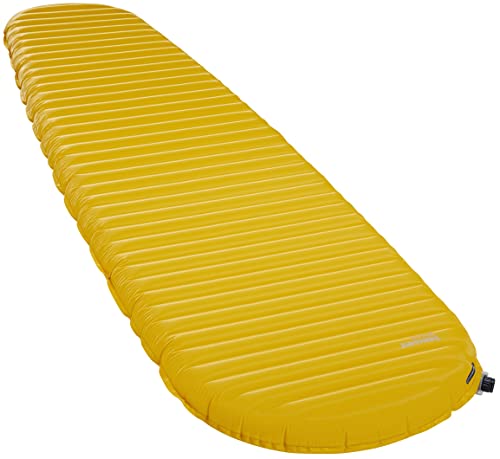
We built the Therm-a-Rest ProLite Plus for backcountry travelers who count every ounce but refuse to sacrifice warmth. This self-inflating pad combines diagonal-cut foam with a tapered shape to deliver an R-value of 3.4 in a package that weighs just over a pound.
Our proprietary Atmos™ foam creates thousands of open cells that trap warm air the moment you open the valve. The tapered mummy design shaves weight where your legs and feet need less insulation, while the 2.5-inch thickness cushions hips and shoulders on rocky ground. Whether you're threading alpine passes in the Rockies or island-hopping the Pacific Northwest, the ProLite Plus self-inflates in under three minutes and packs down to the size of a one-liter water bottle.
ProLite Plus construction highlights
Foam construction and thermal efficiency
The diagonal-cut pattern in our Atmos™ foam is the result of seven years of field testing across Cascade snowfields and Desert Southwest canyons. Instead of horizontally slicing the foam like a loaf of bread, we cut at a 45-degree angle to create alternating density zones that trap body heat while shedding grams. This construction method gives the Therm-a-Rest ProLite Plus its 3.4 R-value without the bulk of older self-inflating designs.
We laminate the foam to a 50-denier polyester shell using a proprietary bonding process that eliminates glue seams where cold can seep through. The result is a pad that insulates your torso and hips as effectively as models twice its packed size. When you pair this pad with a quality quilt, you’re covered for spring shoulder season in the High Sierra and early-fall trips above treeline.
Self-inflation system and valve design
Open the brass valve on the ProLite Plus and you’ll hear air rushing into the foam cells for the first 90 seconds. We engineered the valve with a one-way check mechanism that prevents backflow while you’re adding those final breaths of firmness. Most users achieve their preferred firmness with three to five exhales after the pad self-inflates.
Field adjustments
The valve doubles as a rapid-deflate port when you’re breaking camp in a hurry. Push the valve stem inward and roll the pad from the foot end to force every pocket of air out in under 30 seconds. This feature matters on alpine starts when you’re racing weather windows or trying to catch first light on a summit push.
Sizing and packed dimensions
We offer the ProLite Plus in four lengths to match your height and pack volume budget. The Regular (72 inches) suits most users between 5’6″ and 6’0″, while the Large (77 inches) accommodates taller backpackers without excess material bunching at your feet. Small and Women’s sizes taper more aggressively to save weight for solo fastpackers.
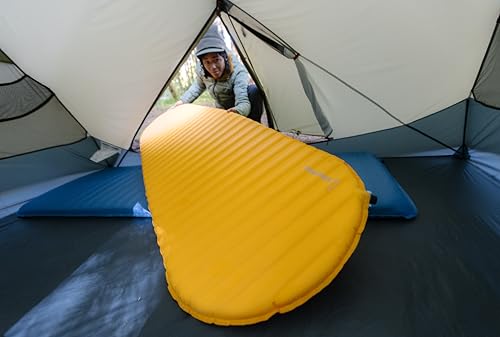
Every size shares the same 20-inch shoulder width, which fits inside the floor of a two-person tent without overlapping your partner’s pad. When rolled, the Regular size measures 10 inches long by 4 inches in diameter—small enough to stow horizontally in the bottom of a 50-liter pack or strap to the outside without throwing off your center of gravity on technical descents.
More sleeping pads for backcountry trips



Rated 4.8 by verified buyers


Questions about the ProLite Plus
The ProLite Plus self-inflates to about 80 percent firmness in two to three minutes at sea level. At higher elevations—above 8,000 feet—the lower air pressure means the pad inflates slightly faster, often reaching usable firmness in under two minutes. Most users add three to five breaths after self-inflation to achieve their preferred firmness. Cold temperatures slow the process by about 30 seconds, so give the pad an extra minute if you're setting up camp in freezing conditions.
The ProLite Plus carries an R-value of 3.4, which translates to comfortable three-season use down to approximately 20°F when paired with an appropriate sleeping bag or quilt. This R-value is tested using the ASTM F3340 industry standard, so you can compare it directly to other pads on the market. For temperatures below 20°F, we recommend layering the ProLite Plus with a closed-cell foam pad or upgrading to our ProLite Apex model, which has a higher R-value thanks to its heat-reflective ThermaCapture layer.
The pad is designed to self-inflate without a pump, but you can absolutely use a manual pump or electric inflator if you prefer. The brass valve accepts standard sleeping pad pump nozzles, and some users carry a lightweight pump sack to top off the pad without using lung power at altitude. That said, most backpackers find the self-inflation feature eliminates the need for a pump entirely—you're only adding a few breaths to fine-tune firmness, not inflating the entire pad from scratch.
Open the valve fully and roll the pad tightly from the foot end toward the valve, pressing down as you go to force all air out. Once you're within six inches of the valve, close it to seal in the compressed foam, then finish rolling. The included stuff sack has an integrated compression strap—cinch it tight to reduce the rolled pad to its minimum diameter of about four inches. For even tighter packing, some users fold the pad in half lengthwise before rolling, though this puts slightly more stress on the foam over time.
The 50-denier polyester shell is built to handle typical backcountry abuse including small rocks, roots, and pine needles. We've tested it on granite slabs, volcanic scree, and desert hardpan without punctures under normal use. That said, always clear your tent site of sharp sticks and large rocks before laying down the pad. If you're camping on especially rough surfaces like lava rock or exposed limestone, consider placing a ground cloth or closed-cell foam pad underneath for extra protection. The pad ships with a repair kit for field fixes if you do encounter a puncture.
The ProLite Plus uses diagonal-cut foam instead of the horizontal-cut foam found in the original ProLite, which increases warmth without adding weight. The Plus version also has a slightly thicker profile at 2.5 inches compared to the original's 1.5 inches, making it more comfortable for side sleepers and those who need extra cushion on hard ground. Both pads share the same tapered mummy shape and self-inflating valve system, but the ProLite Plus delivers a higher R-value in the same packed size.
Yes, field repairs are straightforward with the included Universal Repair Kit. Clean and dry the punctured area, then apply one of the pressure-sensitive patches directly over the hole. Press firmly for 30 seconds to ensure a good bond, and wait five minutes before re-inflating the pad. The repair will hold through hundreds of inflation cycles if applied correctly. For larger tears or valve damage, the kit also includes spare valve components and detailed instructions. Most punctures are small enough to patch in under two minutes without any tools.